Updated in January 2026
What Is Point of Sale Design? The Complete Guide for Retail Brands
TL;DR
Point of sale design is the strategic creation of displays, signage, and promotional materials placed at checkout areas to capture customer attention and drive impulse purchases. It combines visual appeal, brand messaging, and clever product placement to boost sales at the exact moment shoppers are ready to buy. Research shows 62% of shoppers make impulse purchases, with well-designed POS displays increasing sales by up to 80%.
Ready to transform your retail presence? Explore our point of sale design services or get in touch for a quote.
Table of Contents
- What Is Point of Sale Design?
- How Does Point of Sale Design Work?
- What Types of POS Displays Are There?
- Top 10 Benefits of Point of Sale Design
- How to Create Effective POS Displays
- What Materials Work Best for POS Displays?
- Common Mistakes to Avoid
- POS Design Trends for 2026
- FAQs
- Conclusion
What Is Point of Sale Design?
Point of sale design refers to the strategic creation of promotional displays, signage, and marketing materials positioned at or near checkout areas in retail environments. These displays are designed to capture customer attention, encourage impulse purchases, and reinforce brand identity at the critical moment when shoppers are ready to buy.
Here is the thing. The checkout area is prime real estate in any store. Customers are already in buying mode. They have their wallets out. A well-designed POS display can turn a single purchase into multiple items in the basket.
POS design encompasses several key elements:
- Visual displays such as counter units and floor stands
- Promotional signage including shelf talkers and hanging signs
- Product placement strategies that maximise visibility
- Brand messaging that reinforces your identity
- Structural design that holds products securely
According to the Point of Purchase Advertising International (POPAI), approximately 70% of purchasing decisions are made in store. This makes POS design one of the most effective marketing tools available to retail brands.
How Does Point of Sale Design Work?
POS design works by influencing customer behaviour at the final stage of their shopping journey. When a customer reaches the checkout, they have already decided to make a purchase. POS displays provide one last opportunity to increase basket size.
The Psychology Behind POS
You might be wondering why POS displays are so effective. The answer lies in consumer psychology:
- Impulse triggers: Small, affordable items displayed at eye level trigger spontaneous purchases
- Problem recognition: Customers see a product and realise they need it
- Convenience: Items are easy to grab without leaving the queue
- Urgency: Limited time offers create a fear of missing out
The POS Design Process
At Creators and Makers, we follow a proven six step process for every POS project:
- Brief and Consultation: Understanding your needs and developing a clear design brief
- Concept Creation: Generating creative ideas that align with your brand
- Design Development: Refining the chosen concept across all required platforms
- Proof and Prototyping: Creating samples to ensure quality before production
- Production and Fulfilment: Manufacturing and delivering your displays
- Feedback: Reviewing outcomes to improve future projects
This structured approach ensures every display is disruptive, practical, and delivers on expectations.
What Types of POS Displays Are There?
There are several types of point of sale displays, each suited to different retail environments and marketing objectives.
Counter Display Units (CDUs)
CDUs sit on checkout counters and hold small, impulse purchase items. They are compact, cost effective, and perfect for products like sweets, batteries, or travel sized toiletries.
Free Standing Display Units (FSDUs)
FSDUs are floor standing units that can hold larger quantities of stock. They work well for seasonal promotions, new product launches, and high volume campaigns. Our team at Creators and Makers has extensive experience with FSDU design and production for major retail brands.
Dump Bins
Dump bins are open containers that hold bulk products. They create a sense of value and encourage customers to rummage for items. They work particularly well for discounted or promotional stock.
Shelf Talkers and Wobblers
These small signs attach to shelving and draw attention to specific products. They are affordable and easy to update for different promotions.
Hanging Signs and Banners
Overhead displays catch attention from a distance. They are ideal for directing customers to specific areas or highlighting major promotions.
Digital POS Displays
Interactive screens and digital signage are becoming increasingly popular. They can display dynamic content, videos, and personalised offers.
Top 10 Benefits of Point of Sale Design
Here are the key benefits that make POS design essential for retail brands:
- Increases impulse purchases: Studies show 62% of shoppers make unplanned purchases, with 16% directly influenced by in store displays
- Boosts brand visibility: Eye catching displays ensure your products stand out in crowded retail environments
- Drives sales uplift: Well designed POS can increase product sales by 20% to 80% depending on the category
- Reinforces brand identity: Consistent branding at point of sale strengthens customer recognition and loyalty
- Supports product launches: New products gain immediate visibility when displayed prominently at checkout
- Creates urgency: Limited time offers displayed at POS encourage immediate action
- Maximises retail space: Effective displays make use of often overlooked areas near tills and in queues
- Provides flexibility: Temporary displays can be updated seasonally without permanent store changes
- Offers measurable ROI: Sales uplift from POS campaigns can be tracked and measured
- Enhances customer experience: Well designed displays add visual interest and can improve the shopping journey
According to research cited by Google Think, 80% of consumers visit physical stores when they need items immediately. This makes in store marketing more relevant than ever.
How to Create Effective POS Displays
Creating effective POS displays requires careful planning and attention to detail. Here is how to get it right.
Start with Clear Objectives
Before designing anything, define what you want to achieve. Are you launching a new product? Clearing excess stock? Building brand awareness? Your objectives will shape every design decision.
Know Your Audience
Understand who shops in your target retailers. What motivates them? What catches their attention? A display targeting parents with young children will look very different from one aimed at young professionals.
Keep Messaging Simple
Shoppers have limited attention spans. Your message should be clear enough to understand in three seconds or less. Use bold headlines, simple graphics, and a clear call to action.
Consider the Environment
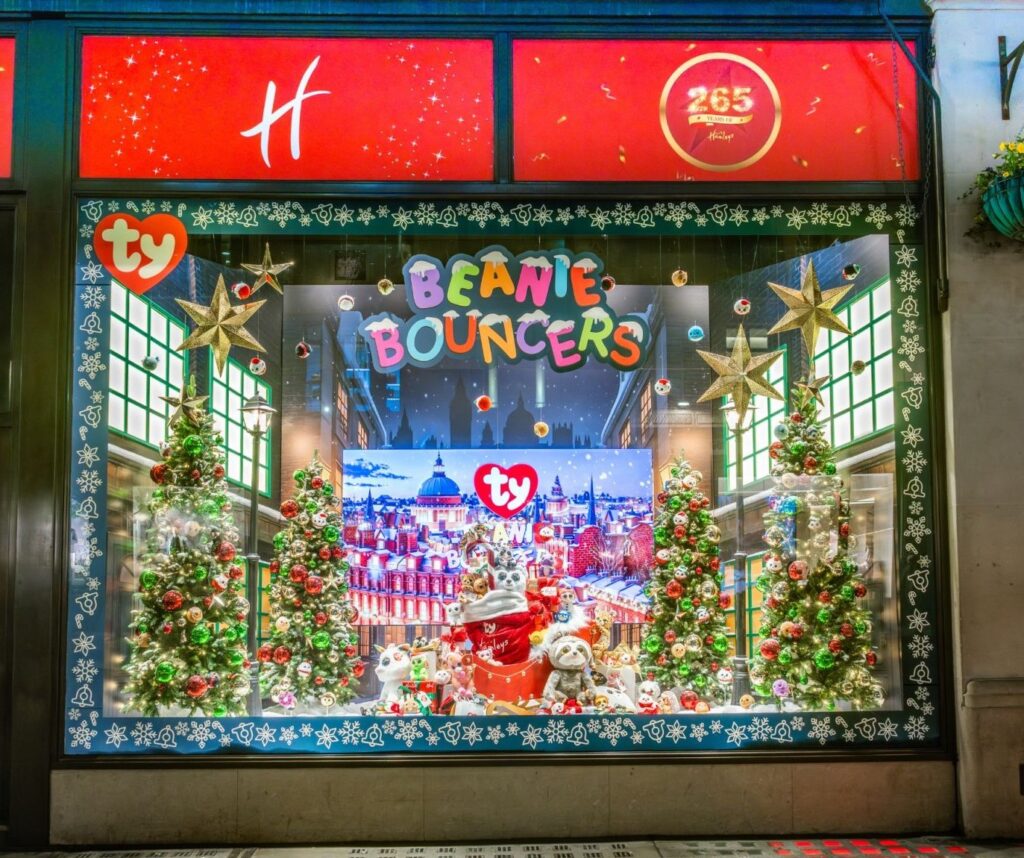
Every retail environment is different. A display for a Tesco supermarket will have different requirements than one for Hamleys toy shop. Our team works closely with clients to understand retailer guidelines and constraints, ensuring displays are accepted and installed correctly.
Focus on Structural Integrity
A display that falls apart reflects poorly on your brand. Structural design, weight testing, and transit trials are essential steps in the production process.
Plan for Installation
The best designed display is useless if it cannot be installed properly. Consider who will set it up, what tools they will need, and how long it will take.
What Materials Work Best for POS Displays?
The choice of materials depends on your budget, campaign duration, and brand positioning.
Cardboard and Corrugated Board
- Best for: Temporary promotions and short term campaigns
- Advantages: Cost effective, lightweight, easy to print, recyclable
- Considerations: Less durable, not suitable for heavy products
Plastic and Acrylic
- Best for: Longer campaigns and premium products
- Advantages: Durable, wipeable, professional appearance
- Considerations: Higher cost, less environmentally friendly
Metal and Wire
- Best for: Permanent or semi permanent installations
- Advantages: Very durable, can support heavy products
- Considerations: Highest cost, requires professional installation
Wood and MDF
- Best for: Premium retail environments and luxury brands
- Advantages: High quality finish, versatile, sustainable options available
- Considerations: Heavy, more expensive than cardboard
At Creators and Makers, we work with a vast range of materials to suit any environment. Our creative team can advise on the best options for your specific project.
Common Mistakes to Avoid with POS Design
Even experienced brands make mistakes with POS design. Here are the most common pitfalls to avoid:
Overcomplicating the Message
Too much text or too many products on one display creates confusion. Keep it focused and simple.
Ignoring Retailer Guidelines
Every major retailer has specific requirements for POS displays. Ignoring these guidelines can result in your displays being rejected or removed.
Poor Quality Production
A flimsy or poorly printed display damages brand perception. Invest in quality production to protect your brand image.
Forgetting About Logistics
A brilliant design means nothing if it arrives damaged or cannot be assembled. Plan for shipping, storage, and installation from the start.
Not Testing Before Rollout
Always create prototypes and test them before committing to a full production run. This catches problems early and saves money.
Neglecting Sustainability
Modern consumers care about environmental impact. Consider using recycled materials and ensure displays can be recycled after use.
POS Design Trends for 2026
The world of point of sale design is evolving rapidly. Here are the key trends shaping the industry in 2026.
Sustainability as Standard
Eco friendly materials are no longer optional. Retailers and consumers expect displays made from recycled, recyclable, or responsibly sourced materials. The British Retail Consortiumreports that sustainability is now a key factor in purchasing decisions.
Modular and Reconfigurable Displays
Brands are investing in displays that can be updated and reconfigured for multiple campaigns. This reduces waste and offers better value over time.
Digital Integration
Expect to see more displays incorporating QR codes, NFC tags, and digital screens. These create interactive experiences and bridge the gap between physical and online retail.
Warm Minimalism
Gone are the stark white environments of recent years. 2026 sees a shift toward warmer colours, rounded edges, and more inviting designs that create calmer shopping experiences.
Data Driven Design
Sensors and analytics are helping brands understand how customers interact with displays. This data informs future designs and improves ROI.
Inclusive Design
Displays are being designed to cater for all shoppers, including those with accessibility needs. This includes considerations for height, reach, and visibility.
Frequently Asked Questions
What is the difference between POS and POP displays?
POS (point of sale) displays are positioned specifically at checkout areas where transactions occur. POP (point of purchase) displays can be placed anywhere in store to influence buying decisions. Both aim to drive sales, but POS targets the final purchase moment.
How long does it take to design and produce POS displays?
Timelines vary depending on complexity. Simple cardboard displays typically take 2 to 4 weeks. Custom FSDUs require 4 to 8 weeks. Large scale campaigns with multiple display types may need 8 to 12 weeks from brief to delivery.
Do POS displays actually increase sales?
Yes. Research consistently shows that POS displays can increase product sales by 20% to 80%. According to POPAI, 62% of shoppers make impulse purchases, with a significant proportion influenced by in store displays.
What size business can benefit from POS design?
Businesses of all sizes can benefit. Small retailers can start with simple counter displays and shelf talkers. Larger brands can invest in comprehensive campaigns with multiple display types across hundreds of stores.
Can POS displays be recycled?
Yes, particularly cardboard and corrugated displays which are fully recyclable. Many manufacturers now offer FSC certified materials and carbon neutral production options. Ask your supplier about their sustainability credentials.
Should I use an agency or design POS in house?
For simple, one off displays with existing design resources, in house may work. For larger campaigns, national rollouts, or projects requiring specialist production knowledge, an experienced POS agency adds significant value through expertise, supplier networks, and quality assurance.
Conclusion
Point of sale design is one of the most effective tools available to retail brands. By capturing attention at the critical moment when customers are ready to buy, well designed POS displays can significantly increase sales, reinforce brand identity, and enhance the shopping experience.
The key to success lies in clear objectives, simple messaging, quality production, and attention to the retail environment. Whether you are launching a new product, running a seasonal promotion, or building long term brand presence, POS design deserves a place in your marketing strategy.
With over 16 years of experience working with leading retail brands, Creators and Makers has the expertise to bring your POS vision to life. From initial concept through to production, fulfilment, and installation, we handle every part of your campaign.
Ready to create POS displays that drive results? Get in touch with our team for a no obligation conversation about your project.