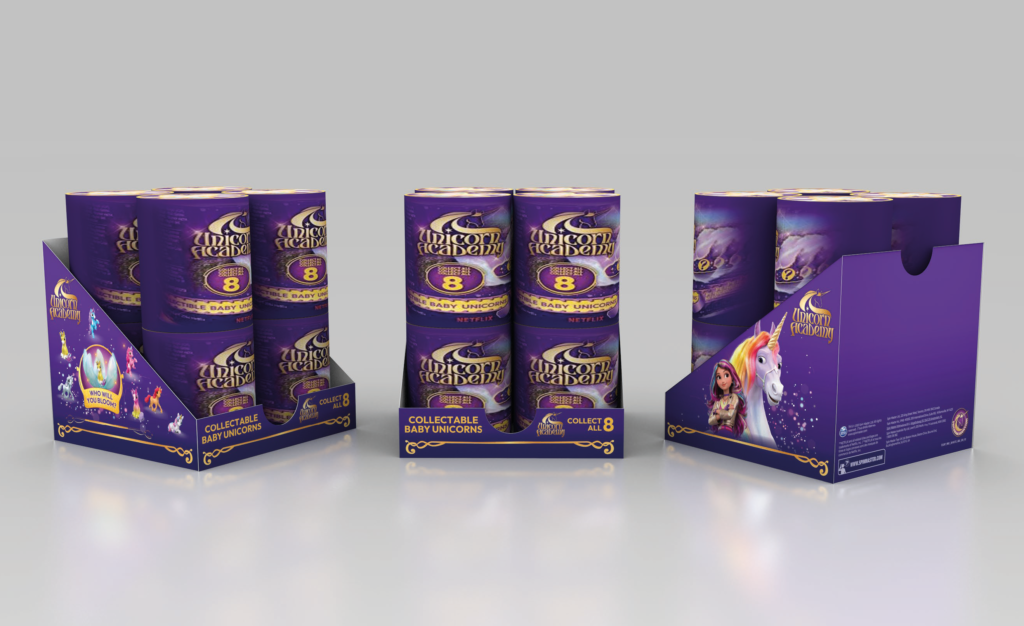
By the Creators & Makers team. Point of sale design and production, Sittingbourne, Kent. Nearly 20 years making retail displays for Hamleys, Harrods, Disney, ghd, Ecover and Turtle Wax.
The short answer
A counter display unit (CDU) is a small, self contained retail display that sits on a till point, counter or shelf and holds a batch of one product. It exists to win the last few seconds before a shopper pays. In the UK, a bespoke cardboard CDU typically works out at a few pounds per unit on a run of 500 or more, with 3 to 5 weeks from signed off design to delivery. Acrylic, timber and metal versions cost more but last for years instead of weeks.
The thing most brands get wrong is treating the CDU as a print job. It is a merchandising decision. Get the stock holding, the refill behaviour and the retailer compliance right first, and the graphics second.
What is a counter display unit?
A counter display unit is a compact display designed to sit on a horizontal surface at or near the point of purchase. You will also see it called a CTU (counter top unit), a countertop display, a till point display or a checkout display. They all mean roughly the same thing.
A CDU normally holds between 12 and 60 facings of a single SKU, arrives either flat packed for store staff to assemble or fully built and pre filled, and is designed to be replaced or refilled rather than restocked from a stockroom.
The defining feature is placement. A CDU is not competing for attention in an aisle. It is competing for the seconds a shopper spends at a counter with their wallet already out.
CDU vs FSDU vs gondola end: which format do you actually need?
This is the question we get most often, and picking wrong is expensive. Here is how the three main promotional formats compare.
| Counter display unit (CDU) | Free standing display unit (FSDU) | Gondola end | |
|---|---|---|---|
| Where it sits | Counter, till point, shelf | Aisle, entrance, promotional zone | End of an aisle run |
| Footprint | Roughly A4 to A3 base | Roughly 400mm to 600mm wide, floor standing | Full bay, usually 1250mm wide |
| Typical stock holding | 12 to 60 units | 100 to 500 units | 300 to 1,500 units |
| Typical unit cost | Low | Medium | Medium to high |
| Best for | Impulse items, small high margin SKUs, new launches | Seasonal pushes, multi tier ranges, larger packs | Category dominance, major campaigns |
| Retailer sign off | Easiest to place | Moderate | Hardest, usually paid space |
| Typical in store life | 2 to 12 weeks | 4 to 12 weeks | 2 to 6 weeks |
If your product is small, impulsive and under about £15, the CDU is usually the right call. If it needs volume or the shopper needs to browse a range, go to a free standing display unit instead. If you are still weighing up formats generally, our guide to point of sale marketing walks through the full set and what each one costs.
Why do counter display units work so well?
Because they intercept a decision that has not been made yet.
The Point of Purchase Advertising International (POPAI) research most commonly quoted in the trade puts the share of purchase decisions made in store at somewhere between 70 and 76 percent, and found that around 62 percent of shoppers will buy on impulse when an appealing display catches them. Worth being honest about those numbers: they come from studies now over a decade old, the methodology has been picked apart publicly, and you should treat them as directional rather than gospel.
What is not in dispute is the mechanic. At a till point the shopper is stationary, mildly bored, already committed to spending money and holding a basket that is not quite full. A CDU is the only piece of retail media that gets to speak in that moment.
More recent POPAI work in 2026, surveying 6,200 shoppers across 400 retail environments, found stores investing heavily in dynamic display technology saw around a 31 percent higher impulse purchase rate than control stores, with 58 percent of shoppers reporting they are influenced by digital display screens. The trend line points the same way it always has. Presence at the counter converts.
What materials should a CDU be made from?
Nearly every result you will find when searching for counter display units is a corrugated cardboard converter. Cardboard is the default for good reason, but it is not the only answer, and if your brand sits in premium beauty, spirits, collectables or tech, it is often the wrong one.
| Material | Typical life | Relative cost | Best for | Watch out for |
|---|---|---|---|---|
| Corrugated cardboard | 2 to 12 weeks | £ | Promotions, launches, seasonal, FMCG | Sags under weight, marks easily, looks cheap up close |
| Solid board and litho laminate | 4 to 16 weeks | ££ | Premium print finish on a temporary budget | Longer print lead times |
| Acrylic and PETG | 1 to 3 years | £££ | Beauty, jewellery, tech, anything shopper handled | Scratches, needs cleaning schedule |
| Timber and MDF | 2 to 5 years | £££ | Craft, spirits, artisan brands, farm shops | Weight, transit cost, fire regs in some estates |
| Powder coated metal | 3 to 10 years | ££££ | High footfall, high theft risk, long campaigns | Tooling cost only pays back over volume |
| Mixed material | 1 to 3 years | £££ | Hero launches where the unit is part of the brand story | Needs a partner who can actually fabricate more than one substrate |
That last row is where we spend most of our time. A metal frame with an acrylic front and a printed board insert gives you a permanent chassis and a swappable graphic, so campaign two costs a fraction of campaign one. It only works if your production partner runs across multiple materials rather than a single line. Our guide to FSDU design and production covers how those processes fit together on a larger format.
If you are unsure whether to buy cheap and often or expensive and once, we broke that decision down in temporary vs permanent POS displays.
What do counter display units cost in the UK?
Pricing is genuinely hard to publish because it moves with quantity, material, print method and whether the unit arrives filled. That said, here is the honest shape of it based on what we quote.
- Corrugated CDU, plain or 2 colour print, 500 units and up: low single figures per unit
- Corrugated CDU, full colour litho laminated, 250 to 1,000 units: mid single figures per unit
- Acrylic or timber CDU, 50 to 250 units: tens of pounds per unit
- Metal CDU with tooling, 250 units and up: highest per unit, lowest cost per week in store
- Prototype or sample: frequently a few hundred pounds, often credited against the production order
Several UK suppliers operate a minimum order value of around £1,000 rather than a minimum quantity, which is a useful thing to ask about early. And factor in three costs that brands routinely forget: pre filling and co packing, transit packaging so the unit arrives undamaged, and store level distribution. On a small run those three can rival the cost of the display itself. We handle the assembly, co packing and fulfilment side in house for exactly this reason.
How long does a CDU take to produce?
Standard UK lead times for straightforward corrugated counter displays run around 5 to 10 working days for smaller batches once artwork is signed off, stretching to 2 to 3 weeks for runs in the hundreds. Express turnaround inside 48 hours exists but you pay for it.
That is production only. A realistic full timeline for a bespoke unit looks like this.
- Brief and concept: 3 to 5 days
- Structural design and CAD: 3 to 5 days
- White sample or prototype for weight and transit testing: 5 to 10 days
- Artwork and print approval: 3 to 5 days
- Production: 5 to 15 days
- Fill, pack and distribute: 3 to 10 days
Call it 4 to 8 weeks end to end for a first run. If you are building to a retailer window, work backwards from the store date and add two weeks of contingency. Retail deadlines do not move.
How do you get a counter display unit accepted by a retailer?
This is the step that kills more CDU projects than budget does. Every major UK retailer has its own specification for what it will put on a counter, and buyers will reject a unit that fails it without much sympathy.
The recurring requirements to design against:
- Footprint limits. Counter space is the most contested real estate in the shop. Know the maximum base dimensions before you sketch anything.
- Stability and weight testing. The unit must not topple when a shopper pulls the front facing. We weight test and transit trial as standard for this reason.
- Assembly time. Many retailers cap store colleague build time, often at a couple of minutes with no tools. If it needs instructions, it needs redesigning.
- Recyclability and material declaration. Increasingly asked for up front. Mono material corrugated is the easy answer, mixed material needs a separation story.
- Refill and disposal plan. Who fills it, how often, and who removes it at end of campaign.
On the compliance side, UK packaging Extended Producer Responsibility now uses a Recyclability Assessment Methodology with a red, amber, green rating that directly affects the fees producers pay, with obligations biting for businesses handling 50 tonnes or more of packaging and turning over more than £2 million. Display units are generally treated as display equipment rather than packaging, but shelf ready packaging and any pack you supply inside the unit are a different matter. Confirm your position with your compliance scheme before you commit to a material.
Five mistakes we see on counter display units
- Designing for the render, not the counter. A unit that looks stunning on a white background can vanish against a busy till point. Mock it up in situ.
- Over specifying stock holding. A CDU that holds 60 units and sells 8 a week looks abandoned by day three. Size it to a fortnight of sell through.
- Putting the message at the base. Shopper eye line at a counter is high. Your headline belongs at the top of the header card, not down by the product.
- Forgetting the second life. If the design cannot take a new graphic panel, campaign two costs you full price again.
- Leaving distribution until last. The best CDU in the world does nothing sat in a warehouse in week three of a six week window.
Getting your CDU made
Creators & Makers is a point of sale design agency in Kent working with brands and retailers across the UK, from Sittingbourne to central London. We handle concept sketches, structural CAD, weight and transit testing, prototyping and full POS production across cardboard, acrylic, timber and metal, then fill, pack and install the finished units in store.
If you have a product that belongs on a counter, tell us about it and we will come back with a format recommendation and a costed route to store.
Frequently asked questions
What does CDU stand for? CDU stands for counter display unit. It is a small retail display designed to sit on a counter, till point or shelf and hold a batch of a single product to drive impulse purchases.
What is the difference between a CDU and a CTU? Nothing meaningful. CDU means counter display unit and CTU means counter top unit. The terms are used interchangeably across the UK POS industry for the same product.
What is the difference between a CDU and an FSDU? A CDU sits on a counter or shelf and holds a small quantity of stock. An FSDU, or free standing display unit, sits on the floor in an aisle or promotional zone and holds far more. CDUs suit small impulse items, FSDUs suit volume and range.
How much does a counter display unit cost in the UK? A bespoke corrugated cardboard CDU typically works out at a few pounds per unit on runs of 500 or more. Acrylic, timber and metal units cost tens of pounds each but last years rather than weeks. Many UK suppliers set a minimum order value around £1,000 rather than a minimum quantity.
How long does it take to produce a counter display unit? Production alone is usually 5 to 10 working days for small corrugated batches and 2 to 3 weeks for larger runs. Allow 4 to 8 weeks end to end for a bespoke unit including concept, structural design, prototyping, artwork approval, production and fulfilment.
Are cardboard counter display units recyclable? Mono material corrugated CDUs printed with water based or standard inks are widely recyclable through normal cardboard streams. Units combining board with plastic, foil lamination or metal fixings need those elements separated first, so declare your material build to the retailer up front.
Can a counter display unit be reused for a second campaign? Yes, if you design for it. A permanent chassis in metal, acrylic or timber with a swappable printed graphic panel means campaign two costs a fraction of campaign one. This only works if the graphic is a separate component from the start.